ENGLISH
  Arabic
 Persian
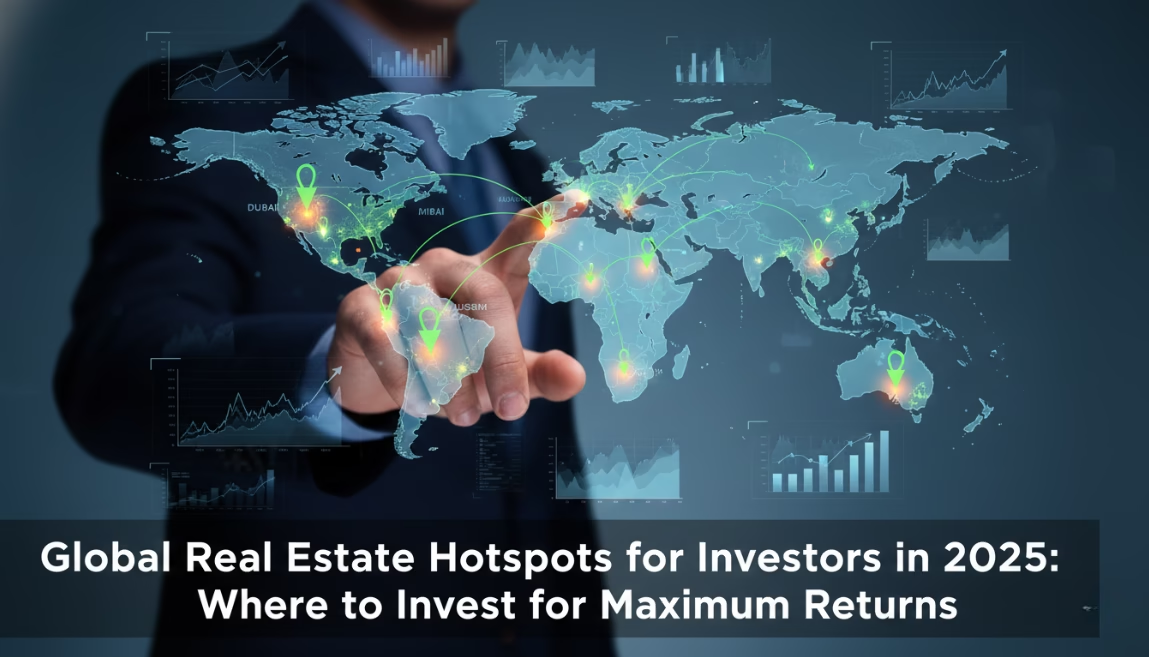
As we move deeper into the 2020s, global dynamics — shifting demographics, remote work trends, evolving lifestyles, economic recovery, and changing geopolitics — are reshaping where real estate opportunities lie.
For investors seeking asset growth, rental yields or even residency/citizenship via property investments, 2025 presents unique windows of opportunity.
With globalization, ease of cross-border investment, and increased mobility, having a diversified real estate portfolio across geographies can help secure income, reduce risk, and unlock international mobility.
This is where Carte Blanche (Immigration & Global Services) helps — our global network, market knowledge, and investment planning can guide you to the best hotspots while managing risks and optimizing returns.
What Defines a “Real Estate Hotspot” in 2025?
Before listing the hotspots, let’s clarify — what makes a property market a “hotspot”?
Key criteria:
- 🔷 Population growth or rising inflow of migrants/expats
- 🔷 Economic growth, stable policies, and strong legal protection for property owners
- 🔷 Favorable currency valuation or growth potential
- 🔷 Demand for rental housing (tourists, students, expatriates, remote workers)
- 🔷 Infrastructure developments (transport, tourism, business centers)
- 🔷 Potential for capital appreciation + rental yield
- 🔷 Stability in political, legal, and financial systems
With those criteria in mind, here are the top regions & markets for global real estate investors in 2025.
Top Global Real Estate Hotspots in 2025
1. United States — Secondary Cities with High Growth Potential
While big metros remain expensive, secondary cities are emerging as great investment hubs:
- 🔷 Cities like Austin (Texas), Charlotte (North Carolina), Nashville (Tennessee), Phoenix (Arizona) — strong job markets, population influx, growing tech & remote work sectors.
- 🔷 Rental yields and capital appreciation offer solid returns as affordability in metros pushes people to more affordable cities.
- 🔷 Demand for rentals from young professionals & remote workers is rising.
For investors looking for stable currency, legal security, and long-term growth, U.S. secondary cities offer a balance of yield and safety.
2. Europe — Emerging Cities with Affordable Property & High Demand
Though major capitals are expensive, smaller and mid-sized European cities offer value:
- 🔷 Countries and cities open to foreign buyers with stable economies, legal protection, and growing rental demand.
- 🔷 Option to benefit from citizenship/residency-by-investment or Golden Visa regimes (where available), adding mobility upside.
- 🔷 Properties in such European hotspots provide good capital preservation, especially as currencies and markets stabilize post-global economic shifts.
Ideal for European residents or global investors wanting exposure to EU markets, stable regulations, and long-term appreciation.
3. Southeast Asia — Emerging Economies & Growing Expat Demand
Rapid economic growth, a rising middle class, and strong tourism make Southeast Asia attractive:
- 🔷 Growing demand for urban housing, rentals for expatriates, remote workers, and tourists.
- 🔷 Potential for high rental yields due to lower entry prices and rising demand.
- 🔷 Long-term growth occurs as economies expand and infrastructure improves.
For investors seeking high yield, diversification, and exposure to developing markets, Southeast Asia is a compelling hotspot.
4. Middle East & Gulf — Hospitality & Investor-Friendly Markets
For investors looking at real estate that benefits from hospitality, expatriate influx, and favorable tax regimes:
- 🔷 Cities in Gulf countries where expatriate populations are high, rental demand is strong, and legal frameworks are supportive of foreign ownership.
- 🔷 Opportunity for short-term rental, commercial real estate, or luxury property investments.
Good option for those combining investment with global mobility, tax optimization, and diversified assets.
5. Caribbean & Small Island Nations — Real Estate + Citizenship Options
Small island nations and Caribbean countries remain attractive for dual benefits: property investment plus citizenship or residency-by-investment (CBI/RBI).
- 🔷 Real estate investments tied to citizenship/residency — offering global mobility, tax perks, and lifestyle benefits.
- 🔷 Growing tourism-driven rental demand, especially in resort-style properties.
- Diversified portfolio advantage — investing where both lifestyle and financial returns align.
For high-net-worth investors seeking global diversification, travel freedom, and lifestyle returns beyond just financial yield.
Regional Overview: What to Expect from Each Hotspot in 2025
USA (Secondary Cities)
- 🔷 Stable political & legal environment
- 🔷 Property value growth due to migration & remote-work trends
- 🔷 Safety and dollar strength for global investors
Europe (Mid-sized Cities)
- 🔷 Regulatory stability and strong tenant protection
- 🔷 Long-term capital preservation and modest but stable returns
- 🔷 Dual benefits if paired with residency/visa programs
Southeast Asia
- 🔷 High yield potential due to low entry cost & rising demand
- 🔷 Diverse economies — good for portfolios needing growth and high ROI
- 🔷 Flexibility via rentals to expats, tourists, and remote workers
Middle East & Gulf
- 🔷 Tax-friendly regimes
- 🔷 High rental demand from transient expat workforce
- 🔷 Luxury real estate and commercial property potential
Caribbean & Islands
- 🔷 Citizenship/residency offers along with property ownership
- 🔷 Growing tourism — rental income & resale potential
- 🔷 Diversified asset hedge against economic cycles
How to Choose the Right Market for Your Portfolio
When picking a market, evaluate:
- 🔷 Investment budget & risk appetite
- 🔷 Investment horizon (short-term yield vs long-term appreciation)
- 🔷 Desired returns — rental income vs capital growth
- 🔷 Liquidity of real estate in that market
- 🔷 Legal & regulatory transparency
- 🔷 Currency and geopolitical stability
- 🔷 Possibility of combining real estate investment with residency or passport benefits
Carte Blanche helps you evaluate personal goals, risk profile, and global lifestyle — then matches you with markets that fit best.
Due Diligence Checklist Before Investing Internationally
Before investing abroad, ensure you:
- 🔷 Verify property ownership, title & legal status
- 🔷 Check if foreign investors are allowed to own property in that country
- 🔷 Understand tax laws, rental regulations, and local compliance requirements
- 🔷 Have clarity on maintenance, property management, and resale laws
- 🔷 Review currency risk, economic stability, and geopolitical environment
- 🔷 Prepare for additional costs (legal fees, taxes, management)
With Carte Blanche’s guidance — documentation, legal compliance, and trustworthy developers — you reduce risk and maximize returns.
Tips to Maximize Returns from Global Real Estate Investment
- 🔷 Diversify across regions — don’t put all eggs in one market
- 🔷 Mix property types — luxury, rental, commercial, vacation — to spread risk
- 🔷 Consider residency/citizenship-linked investments — double advantage: asset + mobility
- 🔷 Invest for medium to long term (5–10 years) — weather short-term volatility for better gains
- 🔷 Leverage local expertise & property management — for smooth rentals & maintenance
- 🔷 Keep updated on global trends — migration, remote work, tourism demand, economic shifts
Why Use Carte Blanche for Global Real Estate Investment?
With years of experience across global markets, Carte Blanche Immigration & Global Services offers:
- 🔷 Access to vetted real estate opportunities worldwide
- 🔷 Full-service consultancy — from property selection to legal, tax & immigration advisory
- 🔷 Risk-mitigation strategies for international investments
- 🔷 Assistance with citizenship/residency programs linked to real estate
- 🔷 Post-investment support — property management, compliance, exit planning
With Carte Blanche, global real estate investment becomes not just possible — but profitable, safe, and streamlined.
Frequently Asked Questions (FAQs)
Q1. Why is 2025 considered a good year to invest in global real estate?
Ans. 2025 sees continuing effects of remote work, global mobility, economic recovery, rising migration, and favorable currency environments — making real estate a strategic asset worldwide.
Q2. Which region offers the highest rental yield potential?
Ans. Emerging markets like Southeast Asia and parts of the Caribbean tend to offer high rental yields due to lower entry costs and strong rental demand.
Q3. Is it safe for foreign investors to buy property abroad?
Ans. Yes — as long as due diligence is done, legal compliance is ensured, and investors work with trusted local agents or global advisors like Carte Blanche.
Q4. Can I combine real estate investment with residency or citizenship benefits?
Ans. Absolutely. Many Caribbean, some European and Middle Eastern markets offer residency or even citizenship upon qualifying real estate investment.
Q5. What is better — rental yield or capital appreciation?
Ans. That depends on your investment horizon and risk appetite. For short-term income — rental yield; for long-term growth — capital appreciation. A balanced portfolio often combines both.
Q6. How many countries should I diversify into?
Ans. Diversification across 2–4 markets is a good strategy — balancing risk, returns, and currency exposure while keeping management manageable.
Q7. Do I need to manage the property myself?
Ans. Not necessarily. You can hire local property management companies or work through global advisors like Carte Blanche, who help manage rentals, tenants, and maintenance.
Conclusion: 2025 — The Year to Go Global with Real Estate
Global real estate in 2025 offers myriad opportunities — from stable U.S. growth cities and European markets to booming Southeast Asia, Gulf markets, and Caribbean islands.
With shifting global dynamics, rising mobility, and increasing demand for international rentals, a diversified real estate portfolio — possibly linked with residency or citizenship — can safeguard and multiply your wealth.
With Carte Blanche as your partner, you can navigate global markets with confidence — from property selection and legal compliance to exit strategy and immigration benefits.
If you’re serious about building a truly global and diversified asset portfolio, now is the time to act. Let’s get started. 🌏💼