ENGLISH
  Arabic
 Persian
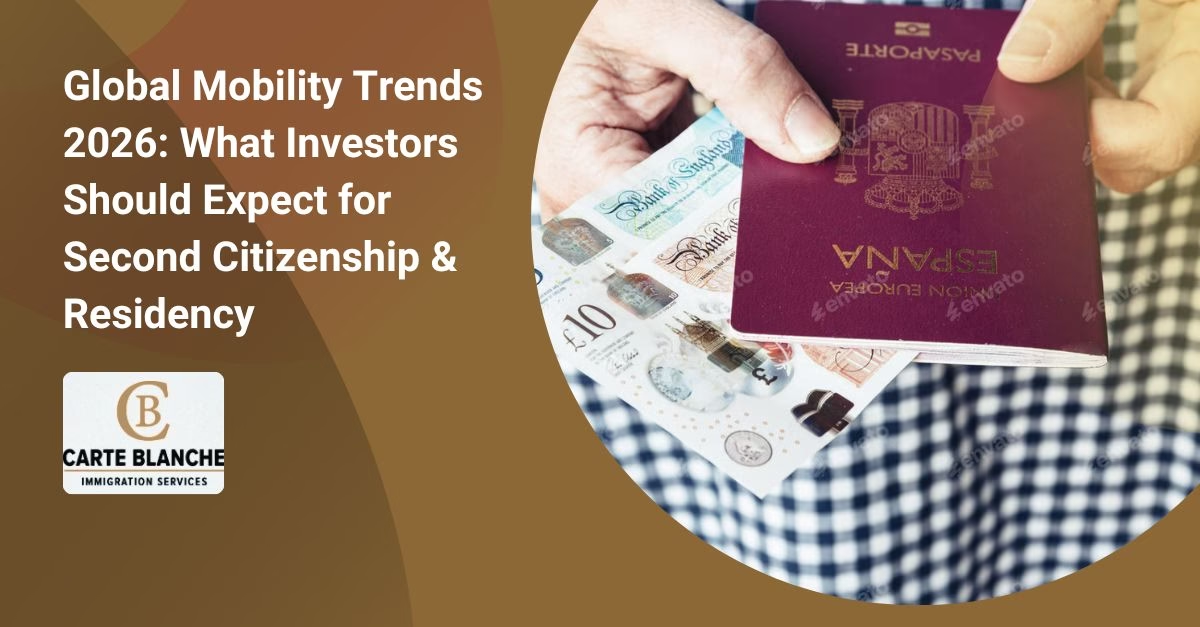
In a rapidly changing world, global mobility is no longer just about travel freedom—it has become a strategic necessity for investors, entrepreneurs, and international families. As governments revise immigration policies and global risks increase, understanding global mobility trends 2026, second citizenship future trends, and the residency investment future outlook is essential for informed planning.
Why Global Mobility Is Becoming a Priority for Investors
Over the last decade, investors have faced rising uncertainty across borders, driving the need for diversified mobility strategies.
- Sudden visa restrictions and border closures
- Political and economic instability
- Increasing tax and compliance pressure
- Limited passport strength for global travel
As a result, global mobility trends 2026 show a shift toward diversifying residency and citizenship alongside financial assets.
Global Mobility Trends 2025: Key Developments to Watch
1. Increased Demand for Second Citizenship
One of the strongest second citizenship future trends is rising demand from high-net-worth individuals and globally mobile professionals.
- Long-term security planning
- Mobility without full relocation
- Cross-border family protection
2. Residency Programs Becoming More Selective
The residency investment future outlook indicates stricter entry requirements as governments prioritize quality applicants and economic contribution.
- Higher due diligence standards
- Stronger compliance frameworks
- Focus on long-term national interest
3. Stronger Due Diligence and Compliance
A key part of global mobility trends 2026 is enhanced background screening. While documentation requirements increase, program credibility and long-term value improve.
Second Citizenship vs Residency: What the Future Looks Like
Second Citizenship Future Trends
Second citizenship programs remain attractive due to speed, permanence, and generational benefits.
- Permanent legal status
- No renewal or extension requirements
- High global acceptance
- Citizenship transferable to future generations
Residency Investment Future Outlook
Residency programs are evolving toward longer commitments and clearer—but not guaranteed—citizenship pathways.
- Longer holding periods
- Physical presence requirements
- Defined compliance benchmarks
Comparison: Second Citizenship vs Residency
| Aspect | Second Citizenship | Residency |
|---|---|---|
| Legal Status | Permanent legal status | Requires long-term commitment |
| Renewal Requirements | No renewal or extensions | Longer holding and renewal periods |
| Global Acceptance | High international recognition | Depends on issuing country |
| Mobility Focus | Mobility solution | Often tied to physical presence |
| Long-Term Security | Transferable to future generations | No guaranteed citizenship |
How Investors Are Using Global Mobility Strategically
Investors now integrate mobility decisions with financial, lifestyle, and generational planning.
- Backup options during global crises
- Smoother international business operations
- Access to quality education and healthcare
- Long-term family security
Risks Investors Should Be Aware Of
- Sudden policy changes
- Program suspension or restructuring
- Confusion between residency and citizenship rights
- Unlicensed or inexperienced advisors
What Investors Should Do in 2026
- Monitor global policy changes regularly
- Select programs with long-term stability
- Prioritize transparency and compliance
- Align mobility plans with tax and lifestyle goals
- Seek professional guidance before applying
Frequently Asked Questions (FAQs)
Q1. What are the most important global mobility trends 2026?
Higher demand for second citizenship, stricter due diligence, selective residency programs, and stronger compliance frameworks.
Q2. Are second citizenship programs expected to continue?
Yes. Second citizenship future trends indicate sustained demand for reputable, well-regulated programs.
Q3. How is the residency investment future outlook changing?
Residency programs are becoming more regulated, with higher thresholds and clearer compliance requirements.
Q4. Is second citizenship better than residency?
It depends on individual goals. Citizenship offers permanence, while residency suits those planning to live or work locally.
Q5. Will global mobility become more difficult?
Global mobility is evolving rather than disappearing. Structured programs still offer legal and strategic options.
Final Thoughts
In 2026, global mobility is a strategic asset. Understanding global mobility trends, second citizenship future trends, and the residency investment future outlook enables investors to plan proactively and protect their families, assets, and global opportunities.
As global mobility priorities evolve, Antigua and Barbuda Citizenship and Passport by Investment continues to attract international investors with its visa-free travel advantages, family-friendly eligibility, and tax-efficient framework.